How Long Does It Take to Replace Windows? Realistic Ranges
A single like-for-like window replacement takes one day. A full-house job across ten to fifteen windows takes one to three weeks on site. Elapsed time is far longer: fabrication runs three to eight weeks before anyone arrives, and patching and painting the reveals afterwards adds another one to two weeks.
At a glance
| Scope | On-site time | Ordering & fabrication | Make-good after install |
|---|---|---|---|
| Single window, sound opening | 1 day | 3–8 weeks | 1–2 days |
| Full house, 10–15 windows | 1–3 weeks | 3–8 weeks | 1–2 weeks |
| Bay windows and specialty shapes | +1–2 days per unit | 3–8 weeks | 1–2 weeks |
Ask how long it takes to replace windows and you’ll get very different answers. One contractor says two days. Another says six weeks. Both are right — for their own project, in their own house, at their own pace.
The honest answer depends on how many windows you’re talking about, how old the house is, and how much time gets eaten by the gaps between the installer arriving and the decorator coming back to paint the reveals. Here’s what those ranges actually look like, what the time is spent on, and what makes any given project run longer.
The two most common ranges
A single window — one day on site. If the opening is in good condition, the existing frame is sound, and the new window is a like-for-like replacement, a competent installer can remove the old unit, fit the new one, seal it up, and do the basic interior finish in a single day. A few hours of actual installation work, spread across the day with prep and cleanup.
A full-house job — one to three weeks on site. Across an average home with ten to fifteen windows, a full replacement takes a few days of removal, a week or two of fitting and sealing, and a couple of days of cleanup. The spread is mostly about how many openings are irregular (older homes), how many different window styles you’re mixing, and how many installers are on site.
Neither of these numbers includes the time between ordering and delivery, which is the biggest source of delay by far. Windows are often fabricated to your exact size, colour, and glass specification — and that takes time. Add two to six weeks for ordering, depending on the supplier.
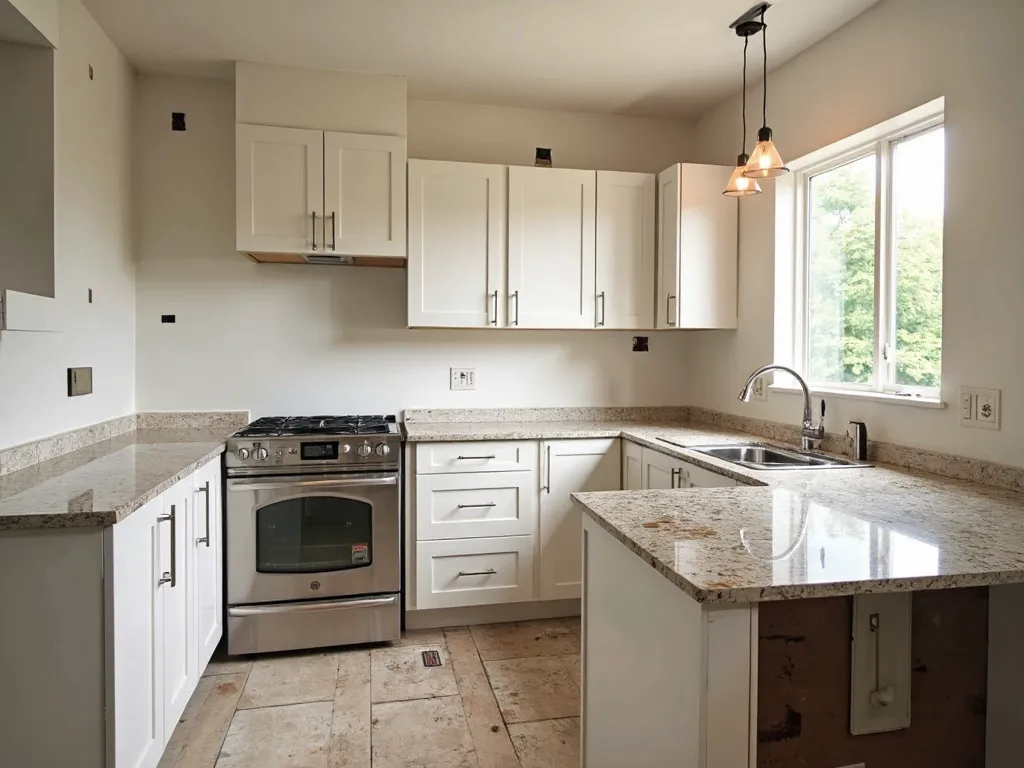
The installation itself is only part of the timeline. What happens before and after — ordering, make-good, and decoration — often takes longer than the install.
What the weeks are actually spent on
Window replacement isn’t one continuous block of work. It’s a series of phases, some fast, some slow, and the gaps between them are where projects lose months.
Phase 1: Selection and ordering. Before a single window arrives, there’s a phase most people under-count. You need to decide on frame material (uPVC, timber, aluminium), glass type, colour inside and outside, handle style, and trim profiles. Then you measure, get quotes, place the order, wait for fabrication, wait for delivery, and hope nothing got mixed up in the factory. This phase alone often takes three to eight weeks.
Phase 2: Removal and prep. The old windows come out. This is where you find out if the existing openings are in good shape. In a new build, the openings are square and clean. In a thirty-year-old house, the previous owner’s handyman may have patched things with expanding foam and silicon that’s better left untouched — or you might find rot in the sill that wasn’t obvious from the surface. This phase adds days when it shouldn’t, and nobody sees it coming.
Phase 3: Installation. The new frames go in. Each window is checked for plumb and square, shimmed into position, fixed to the structural wall, and sealed. The installer checks the operation of the opening mechanisms — hinges, handles, locks — before moving to the next one. This is the skilled, visible part of the project. A team of two working on a standard house typically finishes in five to ten days, depending on the number and complexity of windows.
Phase 4: The make-good. The installers leave. The windows work. But the job isn’t done — the reveals still need patching, painting, or re-tiling, the interior trim and architraves need installing, and the exterior flashings and pointing need finishing. This is the phase most people forget to budget for, and it can easily add one to two weeks after the installers have gone home.
What makes a window project run long
Every project has its own delay profile, but there are some that show up again and again:
Out-of-square openings. This is the single biggest time-sink in older homes. If the opening isn’t square — and in a house that’s settled over decades, that’s the norm rather than the exception — each window takes longer to fit because the installer has to shim it in multiple places, adjust the packers, and sometimes cut the frame to fit. A square opening takes five minutes to fit. An out-of-square one takes an hour.
The decorator’s schedule. The window installer finishes in two weeks. The decorator who’s going to paint the reveals and install the trim is booked three weeks out. That means the project sits for three weeks with windows installed but rooms not quite finished. The decorator doesn’t show up for weeks. You’re sitting in a partially decorated house wondering when it’s going to actually feel done.
Wrong order from the supplier. It happens more often than you’d expect. The factory sends size A to the room that needs size B, or a window ordered in white comes in a colour that’s close but not the same. The replacement takes another two to four weeks. The project stops dead while that window sits on a pallet somewhere.
Bay windows and specialty shapes. A standard rectangular sash or casement window is straightforward. A bay window with multiple angles, a curved top, or a casement that opens outward into a tight space is a different proposition. The installer needs to handle more pieces, coordinate more angles, and seal more joints. Expect an extra day or two per unit.
Permits and planning permission. If you’re replacing windows on a listed building, in a conservation area, or in a development with strict appearance rules, you’ll need permission before you order. This isn’t a delay for most homeowners, but it’s worth checking early. You don’t want to spend six weeks waiting for the windows to arrive only to find out you weren’t allowed to change the frame colour.
The bathroom renovation timeline and the rewiring guide both cover the same theme: the visible work is only part of the project, and the invisible gaps between trades are where delays accumulate. Window replacement follows the same pattern.

Even the details — handles, locks, hinges — need to be specified and ordered before the install starts. They’re small things that can stop the entire project if you forget them.
Practical tips for keeping things on track
Lock every specification before ordering. Frame colour, glass type, handle style, trim profile — decide on everything and write it down. A single window out of spec can delay the entire project by weeks while the factory makes a replacement.
Order early and have a fallback plan. Don’t order until you’re ready to commit, but don’t wait until the last week before you want the install to start. If you’re doing a full-house job, order enough lead time for the supplier to get things right. Have a date you want the install to start, count back six weeks, and place the order by that date.
Pre-book the decorator. This is the one most people forget. The decorator who does the reveals and trim needs to be booked for the week after the install finishes. If they’re not booked, your finished windows sit exposed and unfinished while you figure out decoration.
Check the openings before the install day. Walk through the house with the installer or their estimator and flag any windows that look like they might have rot, structural issues, or previous bad repairs. This lets you budget extra time for those specific units.
When the whole thing feels manageable
If you’re replacing a few windows in an older house and you’re feeling overwhelmed by the timeline, here’s the thing: window replacement is one of the more predictable renovation projects you can take on. The trades involved — an installer and a decorator — are straightforward, there’s no plumbing or electrical to coordinate, and the house stays habitable throughout.
The delays are mostly about ordering and make-good, which means they’re preventable. Order early. Book the decorator. Write down every specification. Check the openings before the install starts. If you do those four things, a full-house window replacement in an average home typically finishes in three to five months from first decision to fully decorated, with the actual on-site work taking a fraction of that time.
A similar planning approach works for any renovation project, of course. If you want to think about how a step-by-step renovation plan fits into this kind of timeline, or how to track what you’re spending across multiple trades, those posts go into the wider process that window replacement is a part of.
The bottom line
A single window takes a day. A full-house job takes one to three weeks of on-site work, plus two to six weeks for ordering and delivery, plus one to two weeks for the decorator to come back and finish the reveals. That’s roughly two to five months from first decision to fully decorated, and maybe as little as six weeks if everything lines up perfectly and you’re replacing a small number of straightforward units in a new build.
The gap between the installer leaving and the house feeling done is almost always longer than the install itself. Plan for that. Book the decorator early. Write down every specification. And keep a record of what you chose — not just for the installers, but for yourself, years from now when you need to replace that one window in the bathroom and can’t remember what colour the frames are.
A renovation contingency budget is the other piece of practical advice that applies here: the budget line that exists for when the installer finds rot behind the old frame or the decorator’s reveal work turns out to be more extensive than expected. It’s not a failure to have one. It’s planning for the reality that older homes always have surprises.
If you’re managing a renovation at all — whether it’s ten windows or ten rooms — a single place to keep track of decisions, budgets, and tasks makes the whole process considerably less stressful. Home Stories is a free app for iPhone and iPad that does exactly that: a running total, task lists, and before-and-after photos. It works fully offline and needs no account. A PDF, and sync across your devices, are part of Pro.
Sources and further reading
The ranges and guidance above are drawn from direct project experience and from the bodies below, which publish the underlying standards, rules and market data. They are worth reading directly before you commit money.
- Do you need planning permission? — UK Planning Portal
- Building regulations approval — GOV.UK
Frequently asked questions
How long does it take to replace a single window?
If the opening is in good condition — the frame is sound, the surrounding walls are undamaged, and the new window is a like-for-like replacement — a competent installer can fit a single window in a few hours, easily done in a single day including sealing and finishing. The tricky part is usually the prep: measuring correctly, removing the old frame without damaging the surrounding wall, and making sure the new unit is plumb and square. If the existing frame is rotting, the opening is irregular, or there's been a previous bad repair, allow an extra day for remedial work.
How long does a full-house window replacement take?
Across an average home with roughly ten to fifteen windows, a full replacement — removing old frames, cleaning openings, fitting new units, sealing, and basic finishing — typically takes one to three weeks on site, depending on how many installers are working and how straightforward the openings are. A straightforward job in a new-build or recently renovated house with uniform windows can be done in under a week by a team of two. A period property with irregular openings, bay windows, arched tops, or windows that have been previously replaced in a patchwork fashion can take three weeks or more. The elapsed calendar time is often longer because of ordering and delivery lead times for the window units themselves.
What takes the longest in a window replacement project?
Three things tend to eat the most time. First, the gap between ordering and delivery — windows are often fabricated to order in the colour, glass type, and size you need, and lead times can stretch from a couple of weeks to over eight for specialty products. Second, the make-good phase after installation: patching the plaster, repainting the reveals, installing the interior trim and architraves, and re-tiling or re-tiling around the frame if the installer had to cut into the wall. Most people don't count this phase, and it can easily add one to two weeks after the installers leave. Third, in older homes, the discovery that the existing window openings aren't square or have suffered structural settling, which means the installer has to spend extra time shimming, packing, and adjusting each unit to sit plumb.
Can you live in your house while windows are being replaced?
Yes, absolutely. Window replacement is one of the less disruptive renovation projects because it doesn't involve plumbing, electrical, or major structural work. The house stays powered and heated throughout. The main disruption is that one window at a time is open to the elements during the install — so you'll want to coordinate with your weather forecast. Most installers work room by room, so the rooms they're not in remain completely undisturbed. The loudest part is the removal of the old frames and any demolition around them; the new window goes in quietly with seals and fixings.
What usually causes a window replacement to go over schedule?
The most common causes are ordering delays — the window supplier sends the wrong size or the wrong colour and the whole project stops while replacements are made — and unforeseen condition behind the existing frames. In older homes, it's very common to find rot in the sill or structural gaps behind the old frame that need repair before a new window can be properly secured. In some cases, the installer pulls out an old window and finds that the opening is so degraded that they need a carpenter or a mason to rebuild part of it before they can proceed. Permits and planning permission can also delay things if your property is listed, in a conservation area, or subject to strict external appearance rules — but that's usually caught during the planning phase, not during the install itself.
Should I replace all my windows at once or one room at a time?
If your budget allows, replacing all at once is almost always the better call. You only pay for the scaffolding once, the decorator only does the reveals once, and you get all the energy and comfort benefits at the same time. Doing it room by room spreads the disruption over months — or years — and every time you open a wall in one area, you risk triggering the same rot or settling that you just fixed in a previously replaced window. That said, if you're working with a tight budget, there's no rule against doing it in phases. Just be aware that mixing old and new frames on the same façade looks different to neighbours and to anyone who knows what to look for, and the energy-performance difference between old and new windows on the same house can be noticeable.
How do I keep track of decisions during a window replacement?
Window replacement involves more decisions than most people expect: frame material, glass type (double or triple glazing, low-E coatings), colour inside and outside, handle style, openable or fixed, trim and architrave profiles, and the sill material. Keeping track of these — and making sure every room has the same specification unless you have a deliberate reason for variation — is where the project tends to get messy. A system that helps is keeping a simple spreadsheet or notebook with each room's window specs listed out, plus photos of what's currently installed. The [Home Stories](https://apps.apple.com/app/id6754754960) app lets you store these kinds of decisions alongside your budget and task list, so you can look back and see what you chose without flipping through email threads or text messages from the installer.
Keep reading
How Long Does a Bathroom Renovation Take? Realistic Ranges by Scope
How long does a bathroom renovation take? Realistic time ranges for a refresh through a full gut, plus the delays that always creep in.
How Long Does a Kitchen Renovation Take? Realistic Time Ranges
How long does a kitchen renovation take? Realistic time ranges for a refresh through a full remodel, plus the delays that always creep in.
How Long Does It Take to Rewire a House? Realistic Time by Size
How long does it take to rewire a house? The realistic timeline, what makes it run long, and how to plan around the delays.